Duration:
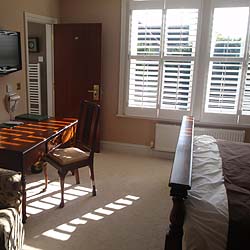
2 days • Price:
$1180.00 or £720.00 +VAT (with hotel room), or
$1000.00 or £600.00 +VAT (without room), •
Venue:
Melksham, England
COURSE START DATES
| • Wednesday 17 February 2010 | • Thursday 6 May 2010 |
| • Wednesday 28 July 2010 | • Wednesday 27 October 2010 |
| • Wednesday 12 January 2011 |
DESCRIPTION
The major part of this course covers the installation and the configuration of
the Apache httpd web server under the Linux operating system. We also have sections on a
number of associated technologies (MySQL, XML, and the Perl, PHP and Python languages) so
that you'll be able to administer web servers running deployed LAMP applications such as
PHPbb, SMB, YaBB, OS-Commerce, or applications you've had specially written.
PREREQUISITES
Basic user and administration knowledge of Linux (as taught on
Linux Basics and
Linux Administration one day courses). Knowledge of a Unix operating system to a similar level is an
acceptable alternative.
Getting the most from your Well House Consultants course
[
Link]
SUBJECT BACKGROUND
The Apache httpd web server, installed on Linux, is perhaps the most
often used web server / operating system combination in the world. This
course covers the installation, configuration and maintainance of an
Apache httpd web server within the Linux environment. Regular tasks
include analysing server usage, taking backups, configuring extra
domains, and dealing with security issues and management reports.
COURSE CONTENT
| Server Side Technologies (module W603) When do I want to use server side technologies?.
Anatomy of a Web Server.
Web Server Security.
Web Server support for page authors.
Server upload technologies.
FTP / Telnet.
Disk Networking system.
Web.
Email.
FrontPage.
Serverside Interface Methods.
The HTTP standard.
Interface methods.
The Common Gateway Interface (CGI).
Server Side Includes.
PHP.
Active Server Pages.
Java Servlets.
Apache Modules.
Your own server.
Other Interfacing methods and a comparison.
Serverside languages.
Perl.
Java.
PHP.
VBScript.
JScript/JavaScript.
C.
C++.
Shell languages.
Others.
Packages.
Programming techniques.
Multiuser.
Cookies, sessions and shopping carts.
Data Filtering.
Scale of use.
Further Serverside examples.
|
| HTML for Web Application Authors (module Q625) Tables.
Frames.
Forms.
Element types within a form.
The script used.
Objects and images within a web page.
Style sheets.
JavaScript.
|
| HTTP (module A207) HTTP Headers, Heads and Bodies.
GET, POST and other methods.
MIME Types, Cache Controls and other headers.
Maintaining state.
Cookie examples.
Uses of Cookies.
|
| Apache httpd - an overview (module A601) What is Apache?.
Apache httpd capabilities.
Basic operation.
Executable programs.
Authentication and secure service.
Virtual servers.
Logs.
Other Web Servers.
|
| Apache httpd - Sourcing, Installation, Testing (module A602) Sourcing Apache httpd.
Configuring httpd.
The user account under which to run the web server.
The address of the web site administrator.
Changing the location of files on the web site.
Allowing more than just serving files!.
Allowing individual users their own web sites.
Configuring log files.
Setting up a separate cgi-bin directory.
Adding Handlers.
Changing your error report pages.
Getting server status reports through the web.
Installing and Configuring httpd on Windows.
Testing your installation.
Testing the basic web directory and home page location.
Testing the userŐs home directory web sites are working.
Testing the server status and server info pages.
Testing your error page.
Testing for the presence and operation of a PHP script.
Testing for the presence and operation of server side includes.
Testing the operation of a .cgi program (written in Perl).
Testing the cgi-bin directory.
Testing wider services.
|
| Further httpd Configuration (module A603) Automatic Start-up.
Per-directory control.
Virtual Hosts.
Name-based Virtual Hosts.
IP-based virtual hosts.
|
| Introduction to SQL and MySQL (module S151) Information organisations.
Plain files.
Directory structure.
Table.
Relational database.
Relational databases.
The structure of a typical RDBMS.
Accessing a relational database from the Web.
Database access protocols.
SQL.
MySQL.
Distributions and licenses.
Component parts of MySQL.
Versions of MySQL.
Production Version.
Development Version.
MySQL- Max.
When should I choose MySQL?.
The use and future of MySQL - David Axmark and Monty Widenius.
A commercial comparison - MySQL v Oracle.
|
| SQL Primer as Used in MySQL (module S152) The structure of a database as seen by SQL.
SQL introduction.
Hello SQL World.
Initial administration and error handling.
Field types and modifiers in MySQL.
Floating point (real) numbers.
Whole (Integer) numbers.
Text Strings.
One or more values from a pre-defined list.
Dates and Times.
Blobs.
Other Modifiers.
Example.
Indexes.
Other matters.
A note on reserved words.
Commands to enter new rows of data.
The INSERT command.
The REPLACE command.
The LOAD command.
Enquiry commands.
Conditional Clauses.
Returning table report information.
Commands to modify existing rows of data.
The UPDATE command.
The DELETE command.
Commands to modify the metadata.
The ALTER Command.
The DROP command.
Other commands.
The SHOW command.
On limiting selection.
Joining tables when selecting rows.
Extra use of SELECT.
Other commands.
Some more advanced SQL.
Loading data from file.
More on joining.
A regular "join".
A left join.
Joining across databases?.
|
| Sourcing, Running and Configuring MySQL (module S153) Overview.
A potted installation procedure.
For use on our training systems.
Installing MySQL onto your laptop.
Install the Perl DBD and DBI modules.
Testing your Installation.
Running the MySQL daemon.
Programs for the user and administrator.
Using the mysqladmin program.
Using the mysql client program.
Managing user accounts and privileges.
Adding an account.
Adding Additional privileges on a per-database basis.
Additional access on a per-host, per table and per-column basis.
mysqlaccess.
Configuring MySQL.
Server configuration.
Client configuration.
Disk structure of data held in a MySQL database.
The data directory.
Database subdirectories.
Table Types.
Setting up security and levels of access.
O/S level and web-level access.
Log in access to MySQL.
Four levels of access within MySQL.
Backing up your database.
Dumping by table.
Accessing mysqld from around your network.
|
| XML, DTD, XSLT, XHTML and More (module A301) What is XML?.
The structure of an XML document.
Examples of XML documents.
Alternatives to XML.
Plain files.
Directory structure.
Table.
Relational database.
When to choose XML and when to use a database.
Defining data types with DTD and XML schema.
Parsing XML - SAX and DOM.
SAX code example.
DOM code example.
Formatting XML data with XSLT descriptors.
Accessing XSLT from programs.
XHTML.
|
| Web Application Design and Deployment (module A211) Planning your application.
The store front page.
Under the hood.
Adding to the shopping cart.
User details.
The final phase.
Complete carter.php4 file.
|
| Secure Service and Credit Cards (module A212) Using a secure server for credit card details.
What is SSL and https?.
How can you use https?.
Programming implications for using a secure service.
Programming to use an electronic payment system.
Commercial matters.
Credit card agreements.
Data Protection.
|
| Introduction (module P201) What is Perl?.
Perl is a computer language.
What does Perl cost?.
What is Perl used for?.
What computer do I need to run Perl?.
Is Perl loaded onto my computer?.
Perl platforms.
Perl on Unix (including Solaris and Mac OS X).
Perl on Linux.
Perl on Windows.
Perl versions.
Older Versions.
How do I find what version I have?.
Macintosh OS X.
Linux.
Solaris.
Windows 98 / Windows 2000 / Windows NT / Windows XP.
Macintosh OS 9 and earlier.
Loading Perl (Windows XP).
Examples of Perl in use.
Calculator.
Screen locator and counter.
A talker.
A changing web page.
|
| Perl on the Network (module P252) Network structure.
Programming for networks.
Providing your own client.
Providing your own server.
Providing your own service.
Building in to an existing service - email.
Building in to an existing service - the web.
|
| The Common Gateway Interface (module P403) The mechanism of the web.
The need for Server Side Programming.
The structure of the server.
Static documents.
Executable programs.
Your first CGI program.
Error Handling.
Use perl -c.
Check with your ISP.
Forms.
Error handling.
URL Encoding.
Input.
Output.
|
| Introduction to PHP (module H101) What is PHP?.
What hardware and software do I need?.
Linux and Unix.
Windows (98, NT, 2000, Millennium, XP).
What does PHP cost?.
PHP versions.
|
| A First PHP Web Page (module H102) Writing and uploading.
The structure of a PHP page.
Sequences of statements.
|
| Designing PHP-Based Solutions: Best Practice (module H115) Thinking through your design.
Tools to help you design.
Designing a smaller application example.
A note on using PHP in a Web environment.
Writing maintainable code.
Code documentation.
Use of functions and include files.
Version issues.
Coding Standards.
And all the languages in one file?.
Writing code for different databases.
Miscellany.
Error handling and software testing.
Bad characters.
Expect the unexpected and check everything.
Error numbering and handling.
Data validation, sessions, XML/XSLT, SQL.
|
| Introduction to Python (module Y101) What is Python?.
Running Python from the command line.
Running Python from a file - "Hello Python World".
Obtaining and installing Python.
Downloading from www.python.org.
Downloading from ActiveState.
Downloading from Plone.
Python versions.
What is Python good for?.
Where did the Python name come from?.
Other resources.
|
| Commercial and Legal Aspects (module A213) Why discuss this on a technical course?.
Data Protection.
Data Protection Act, 1998.
Freedom of Information Act, 2000.
Privacy and credit card security.
Unsolicited commercial emailing and mailing lists.
Page content.
Copyright.
Advertising standards.
Other content issues.
Who is the publisher?.
Registration agencies - the shady dealers.
Accessibility.
Backups and security.
Attracting customers.
Ease of use.
Marketing and visibility.
|
TUTOR and COURSE AUTHOR
Graham Ellis -
graham@wellho.net [
email] [
about Graham]
VENUE
Melksham, Wiltshire
, England. A taxi transfer can be arranged if you'll be
arriving by air
from United States.
Private Courses can be arranged on site in your country.
Public courses run at
Well House Manor - our own
purpose fitted training centre and business hotel / conference centre in
Melksham.
• Download Melksham Map - [
pdf file (750k)] • Google Map - [
Link]
PRICE
| 1 student |
2 students |
3 students |
For 4 or more students
from the same company,
please consider a private course. |
With hotel room $1180.00 ($1386.50 inc VAT) or £720.00 (£846.00 inc VAT) Without room $1000.00 ($1175.00 inc VAT) or £600.00 (£705.00 inc VAT) |
With hotel rooms $2260.00 ($2655.50 inc VAT) or £1340.00 (£1574.50 inc VAT) Without rooms $1900.00 ($2232.50 inc VAT) or £1100.00 (£1292.50 inc VAT) |
With hotel rooms $3340.00 ($3924.50 inc VAT) or £1960.00 (£2303.00 inc VAT) Without rooms $2800.00 ($3290.00 inc VAT) or £1600.00 (£1880.00 inc VAT) |
Notes:
• Multiple discount applies to bookings for second and subsequent delegates on the same running of a course, and on same order.
• Hotel rooms are available for arrival the night before the course starts, for departure after the end of the course on the last day.
|
FOLLOW UPS
This course covers the deployment of applications written in Perl, PHP or Python,
and possibly using MySQL and XML, on Linux Web servers with the Apache httpd web server.
If you'll be writing your own applications or you'll be maintaining code, you might also
want to consider our programming courses such as
Learning to program in Perl,
PHP Programming,
Python Programming and
MySQL.
Upon completion of your course, you'll have online access to the source code of
all the examples from the course, and you'll have access to the "Opentalk" forum
where you can raise questions. We also encourage you to email the tutor, and
to visit us again to use our library as appropriate.
Certification? - [
Link]
FOR FURTHER INFORMATION
Public (scheduled) courses --
http://www.wellho.net/course/ctc.html
For more information about our public courses in general, such as class size, course times, materials provided, special requests, accommodation list, finding our centre, etc.
Terms and Conditions --
http://www.wellho.net/net/terms.html
Covering topics such as delegate substitution, payment, cancellation policy and other matters.